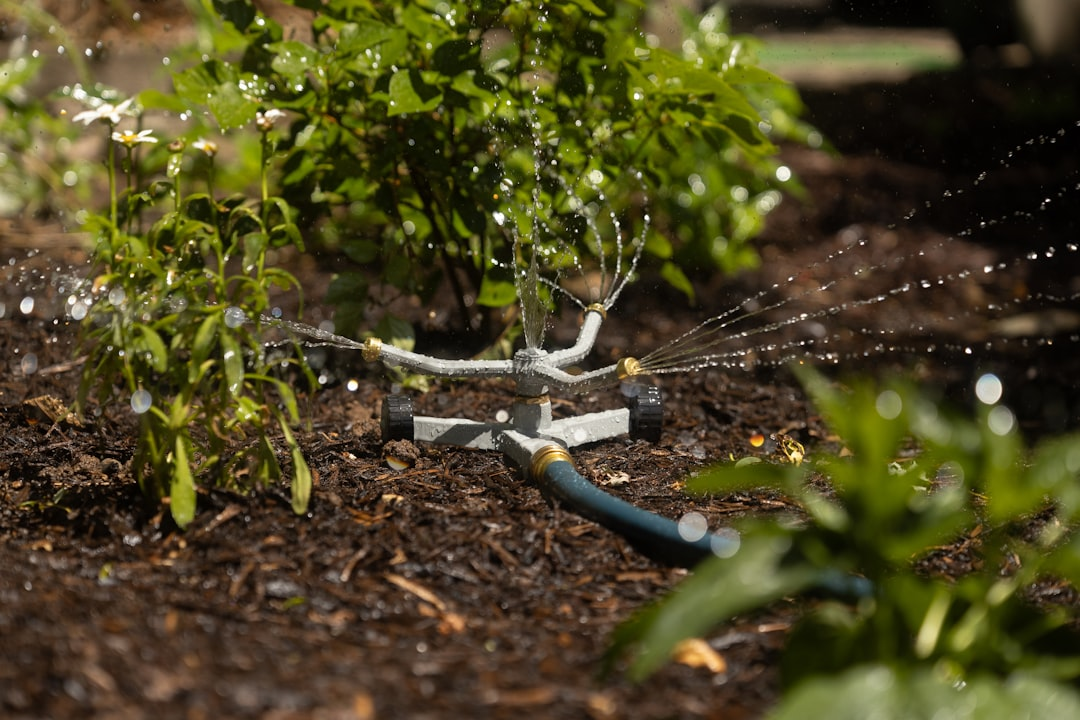
Mulch helps moderate soil temperature, retain moisture, reduce erosion, and slow weed growth. Estimating it accurately requires both the surface area of the bed and the planned depth.
Use the Mulch Calculator to convert bed measurements into bulk cubic yards or bag quantities.
Measure each bed
For a rectangle, multiply length by width. For a circle, measure the diameter, divide by two to find the radius, then multiply the radius squared by 3.1416. Irregular beds can be divided into smaller rectangles, circles, or triangles and added together.
Do not subtract every plant trunk or small shrub. Those areas are usually minor, and a modest cushion makes application easier.
Select the right depth
The appropriate depth depends on the mulch material, existing layer, soil, plants, slope, and project goal. Measure the mulch already present before ordering. If a bed has a usable layer, calculate only the depth needed to refresh it rather than starting from zero.
Avoid piling mulch against tree trunks, plant stems, siding, or wood structures. Excess depth can hold too much moisture, reduce air movement, and create maintenance problems.
Convert area and depth to volume
Convert the planned depth from inches to feet by dividing by 12. Multiply the bed area in square feet by the depth in feet to get cubic feet. Divide by 27 for cubic yards.
For bagged mulch, divide the required cubic feet by the volume printed on the bag, then round up to a whole bag. Check the package carefully because bag sizes vary.
Bulk delivery versus bags
Bulk mulch can be convenient for large areas but may include delivery minimums and fees. Confirm where the load can be dumped and protect pavement when needed. Bagged mulch is easier to transport around small properties and can simplify color or product matching, but handling many bags takes time.
Prepare before spreading
- Remove debris and established weeds.
- Define the bed edge and check drainage.
- Water dry soil before covering it when appropriate.
- Spread evenly instead of creating deep piles.
- Keep mulch clear of trunks, crowns, vents, and foundations.
Recheck the order
Color, texture, particle size, and decomposition rate differ between products. For a consistent appearance, order the same material and batch when possible. Ask how the supplier defines a cubic yard and whether the product settles during delivery.
Use the calculated quantity as a purchasing estimate and adjust for existing mulch, local landscaping practices, and the specific product.
Worked example: two planting beds
Suppose one rectangular bed measures 18 by 6 feet and a second measures 12 by 4 feet. Their areas are 108 and 48 square feet, for a total of 156 square feet. At a planned depth of 3 inches, convert the depth to feet: 3 ÷ 12 = 0.25 foot. Multiply 156 × 0.25 to get 39 cubic feet, then divide by 27 to get 1.44 cubic yards.
A small allowance for irregular edges and settling could bring the planning quantity to roughly 1.5 to 1.6 cubic yards, but the right cushion depends on the bed shape and product. For 2-cubic-foot bags, 39 ÷ 2 = 19.5, so the starting estimate is 20 bags before any allowance. Always use the volume printed on the actual bag.
Decide whether this is a new layer or a refresh
Measure the existing mulch in several places. If 2 inches remain and the target finished depth is 3 inches, calculate only the 1-inch top-up rather than buying another full 3-inch layer. Pull compacted material loose before measuring, and remove any layer that is moldy, contaminated, or blocking drainage instead of burying it.
Order-check list
- Sketch each bed and record the dimensions so no area is counted twice.
- Use one planned depth for each area instead of averaging unlike beds together.
- Confirm whether the supplier sells by the full yard, half yard, or bag.
- Ask about delivery fees, minimums, color variation, and the space required for dumping.
- Keep tree root flares, plant crowns, siding, drains, vents, and wood framing clear.
Costs the quantity estimate does not include
The material calculation normally excludes delivery, removal of old mulch, weed control, edging, landscape fabric, soil repair, grading, tools, wheelbarrow access, and installation labor. Budget those separately. A lower-priced product can also cost more overall if its particle size, decomposition rate, or delivery terms require more frequent replacement.
Common questions
Should every plant be subtracted?
Usually not. Small trunks and plants occupy little plan-view area, and the un-subtracted area provides a modest handling cushion. Subtract large patios, boulders, ponds, or other spaces that clearly will not receive mulch.
What about sloped or highly irregular beds?
Divide the bed into smaller shapes and measure each one. On steep slopes, product movement and erosion can matter more than the mathematical volume, so confirm the material and retention plan with a local landscape professional.
Method and references
See How Our Calculators Work for the formulas, unit conversions, rounding rules, and limitations used across DIY Cost Tools. For plant-specific depth and placement, check current guidance from your local Cooperative Extension service; Penn State Extension’s tree-mulching guidance is one useful starting point.
Calculation example and guidance reviewed September 21, 2026.
Continue planning this project
Landscape-bed depth, soil preparation, and lawn edges should be measured as separate material layers.