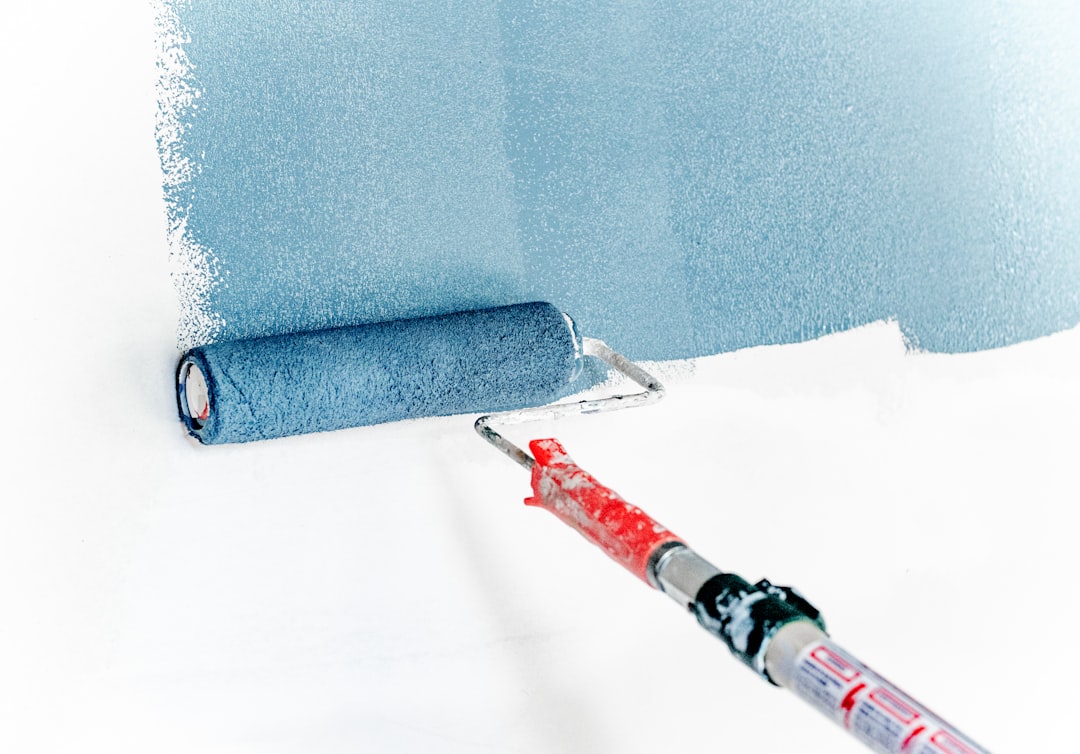
Buying too little paint interrupts a project, while buying far too much wastes money and storage space. A reliable estimate starts with wall area, then adjusts for openings, coats, surface condition, and the coverage printed on the product you plan to use.
Use the free Paint Calculator to turn your measurements into a quick gallon estimate.
Measure the room correctly
Measure the room length, width, and wall height in feet. For a rectangular room, add the length and width, multiply by two to find the perimeter, and multiply that result by the wall height. A 12-by-10-foot room with 8-foot walls has a perimeter of 44 feet and 352 square feet of gross wall area.
Subtract areas that will not be painted. A typical interior door is roughly 20 to 22 square feet and a medium window is often around 12 to 15 square feet, but measuring each opening gives a better result. Closets, alcoves, stairwells, and vaulted walls should be measured separately.
Account for the number of coats
Multiply the paintable area by the number of coats. One coat may be enough for a close color match on a clean, previously painted surface. Two coats are common when changing colors, improving durability, or covering uneven sheen. New drywall, patched areas, porous masonry, and dramatic color changes may also need primer.
Use the manufacturer’s coverage rate
Paint labels commonly provide an estimated square-foot coverage per gallon. Use that number instead of a generic rule whenever possible. Textured walls, porous surfaces, overspray, thick application, and roller choice can reduce real-world coverage. Smooth, sealed walls may come closer to the label estimate.
Calculate gallons
Divide the total paintable square footage for all coats by the coverage per gallon. Round up to a purchasable container size. Calculate wall paint, ceiling paint, trim enamel, and primer separately because they usually use different products and coverage rates.
Plan for touch-ups and color consistency
- Buy enough paint from the same product line, sheen, and color formula.
- Mix multiple cans together in a larger bucket when exact color consistency matters.
- Keep a labeled sample for future touch-ups.
- Confirm return rules before buying custom-tinted paint, which is often nonreturnable.
Common estimating mistakes
Do not use floor square footage as wall area. Avoid subtracting every tiny opening, because normal application loss may offset it. Do not assume one coat without considering the existing color and condition. Finally, check whether the listed coverage applies to one coat and whether the surface needs primer.
A calculator provides a planning estimate, not a guarantee. Recheck measurements and product instructions before purchasing.
Worked example: a 12-by-10-foot room
A 12-by-10-foot room with 8-foot walls has a 44-foot perimeter: (12 + 10) × 2. Multiply 44 × 8 to get 352 square feet of gross wall area. If one door measures 21 square feet and two windows measure 15 square feet each, the paintable wall area is 352 − 21 − 30 = 301 square feet.
For two finish coats, 301 × 2 = 602 square feet of coverage. If the selected paint label states 350 to 400 square feet per gallon for the prepared surface, the mathematical requirement is about 1.5 to 1.7 gallons, so two gallons is the practical starting quantity. Primer, ceiling paint, trim enamel, and an extra touch-up reserve must be calculated separately.
Adjust the estimate for the actual surface
Coverage numbers assume specific application conditions. Bare drywall, porous masonry, rough texture, heavy repairs, strong color changes, and deep or very bright colors may require primer or additional coats. Measure vaulted areas and stairwells separately. For cabinets, doors, trim, and exterior surfaces, use the product manufacturer’s recommended method rather than a wall-area shortcut.
Before you buy
- Write down the paintable area, number of coats, and label coverage used in the estimate.
- Confirm whether primer is required and whether it is a separate product.
- Keep walls, ceilings, trim, cabinets, and exterior work as separate quantities.
- Check sheen, base, color formula, container sizes, and tinted-paint return rules.
- Record the brand, product, sheen, color name, formula, and batch information for future touch-ups.
Costs the gallon estimate does not include
The calculation normally excludes primer, patching compound, caulk, masking materials, drop cloths, brushes, rollers, trays, sprayer loss, ladders, cleanup supplies, disposal fees, taxes, and labor. It also cannot predict the time needed for repairs, drying, sanding, masking, ventilation, or moving furniture.
Health and safety check
Follow the paint and primer labels for ventilation, protective equipment, drying time, and disposal. Disturbing painted surfaces in a pre-1978 home can create hazardous lead dust. Before sanding, scraping, drilling, or demolition, review the EPA’s lead-safe renovation guidance for DIYers and applicable state or local requirements.
Method and review
See How Our Calculators Work for the area formulas, unit handling, rounding rules, assumptions, and limitations used across DIY Cost Tools. The product label remains the controlling source for coverage, preparation, application, and safety instructions.
Calculation example and guidance reviewed September 21, 2026.
Continue planning this project
Use separate measurements for painted walls, wallpapered accents, and new drywall surfaces.